For most of my life I was deeply sensitive, though I did not have that word for it then. What I knew was that being around people left me overwhelmed, that I struggled with sensory needs I could not name, and that I often could not tell what I actually wanted or needed. Underneath it all was a steady feeling that something was wrong, without knowing what.
Boundaries were hard for me too, though not always in a way that was easy to see. My pattern was to fawn: to smooth things over, make myself agreeable, give people what I sensed they wanted, until I could not keep it up and a strong fight response would break through. Between the two, I quietly erased myself. I learned to be "good" by denying my own needs, and pushing away the parts of me that felt too much, wanted too much, needed too much.
Art was the first place I could put any of it. Before I had language for what was happening in me, I had colour and image and material, and making things gave me a kind of relief that talking never did. I did not know it yet, but I was already using art as a somatic experience: a way of moving what was stuck in my body out into something I could see.
That relief is what eventually led me to train as an art therapist. In school I started to understand what I had been doing on my own all along, and I kept going, into somatic work, into parts work, into the body. Somatic therapy taught me to work with my nervous system instead of overriding it. Parts work is where I began to find myself again. I met the parts I had exiled: the ones holding my anger, my boundaries, my rest, my desires. I found my way toward what I actually needed, instead of what I thought I was supposed to need.
Some of what I was learning was about myself. I have been diagnosed with ADHD, and I think I am autistic. I am currently on the waiting list for a neuropsych assessment, which I mention partly because the waiting is its own kind of experience, and partly because you do not need a finished diagnosis to know something true about yourself. Working my own way through this is a big part of why AuDHD is such familiar ground for me. It is a contradictory nervous system: needing novelty and needing sameness, wanting people and needing to be left alone, capable of enormous focus and unable to start. Trying to make sense of yourself with advice written for one profile or the other is genuinely confusing, and a lot of people arrive convinced they are just failing at both.
I also live with C-PTSD. For a long time that meant a nervous system that reacted well before I had any say in it, and a lot of shame about responses I could not explain. I have worked hard, over years and with support, to work with those responses instead of being run by them. I am regulated now in a way I did not think I would get to. Not fixed, and not finished, but steady, and able to find my way back when something knocks me out of it.
These days my training and my art feed each other. What I learn as a therapist changes how I make art, and my art keeps teaching me things I could not have reached through training alone. Wholeness did not mean erasing parts of myself. It meant making space for all of them.
All of this is why the work here is more than something I studied. It is something I have lived my way through, and it shapes how we work together. My sensitivity became a skill, my parts became allies, and my body became a place I could trust again. That is what I hope to offer you.
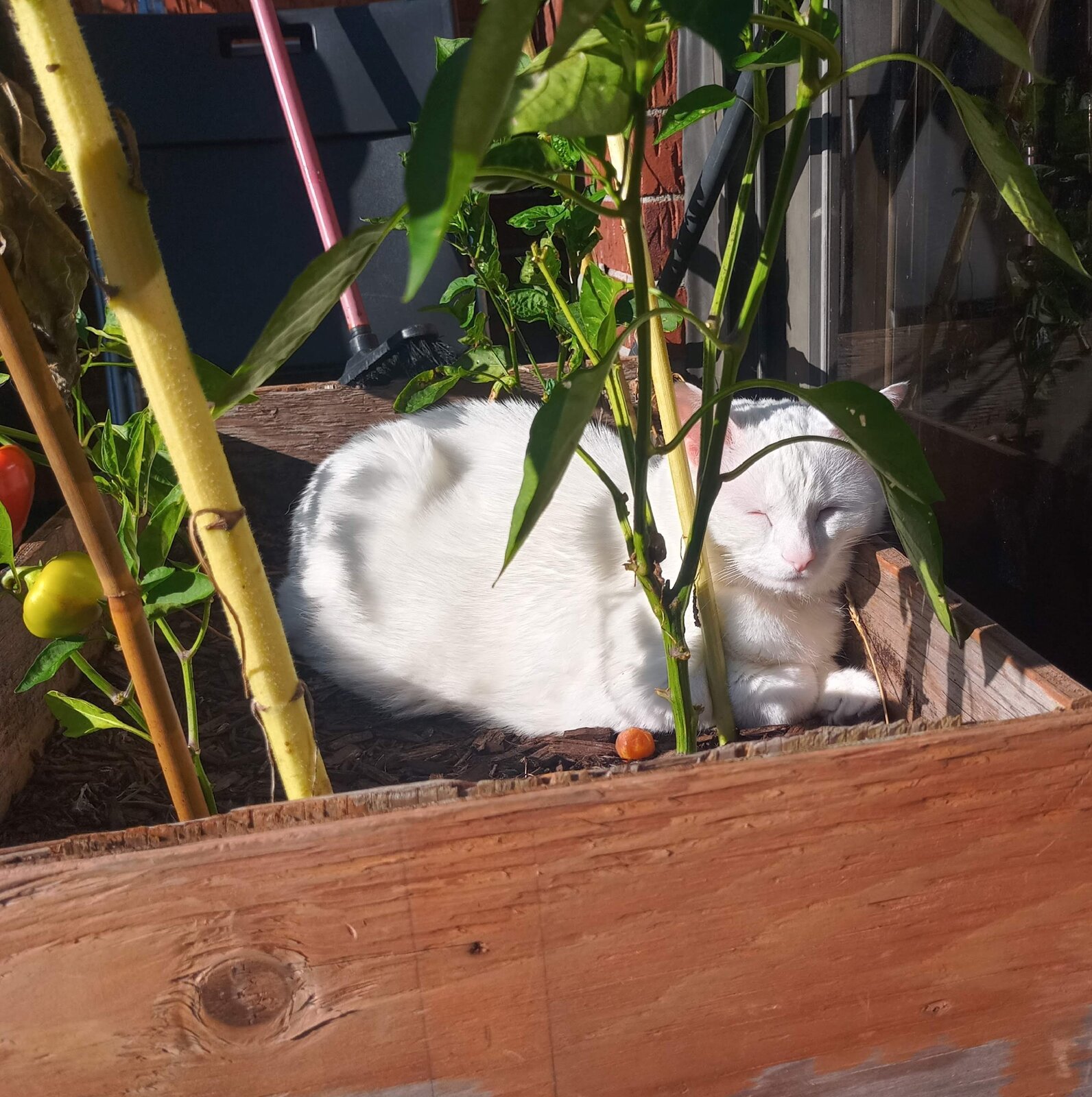
What nourishes me:
All of it reminds me to honour my own pace, find joy in small moments, and tend to what genuinely nourishes me. I am not above needing the reminder.